

Hi, my name is Dr. Neil Farren and Dr. Bingham asked me to introduce myself and cover an emerging topic in spine care. I am a minimally invasive spine specialist at Indiana Spine Group and see patients in Carmel, Fishers, Muncie, and Brownsburg. We are hoping to get an office closer to the Broad Ripple area soon. I grew up in Philadelphia and completed undergraduate at DePauw in Greencastle. I completed medical school and residency at IU and completed my fellowship at University of Cincinnati. I met my wife Amari at DePauw, and we have 7-year-old twins (Landon and Amelia) who keep us busy with all their activities and interests!
I am going to talk about a new treatment for chronic low back pain, basivertebral nerve ablation (BVNA). This is the nerve that sends the pain signals from the top and bottom of each vertebral body to the brain. It is indicated for patients with chronic low back pain that are not surgical candidates.
Chronic low back pain (CLBP) has an estimated cost in the United States of $100 billion annually. This has a significant economic as well as psychological impact on patients suffering from CLBP.
Direct costs of CLBP include:
Indirect costs include:
For many years, it was assumed that the disc was the source of this type of pain. This resulted in procedures (discogram-putting numbing medicine and steroid in the disc to reduce pain) and surgeries (lumbar fusion) that did not result in significant reduction in pain.
This resulted in research that indicated that the pain comes from ingrowth of nerves and blood vessels into the top and bottom plate of the vertebral body (Figure 1). This process causes specific changes on the MRI (Modic endplate changes) that are indicative of this process (Figure 2). These changes act like bone bruises, causing pain when they have increasing pressure on them. This is called vertebrogenic low back pain.

Figure 1

Figure 2
Vertebrogneic low back pain:
Symptoms:
Treatment for this type of pain is BVNA. This is where a scar is put on the nerve and this stops the pain signal from being sent. It is a 1-time procedure, and the nerve does not grow back.
Indications for BVNA:
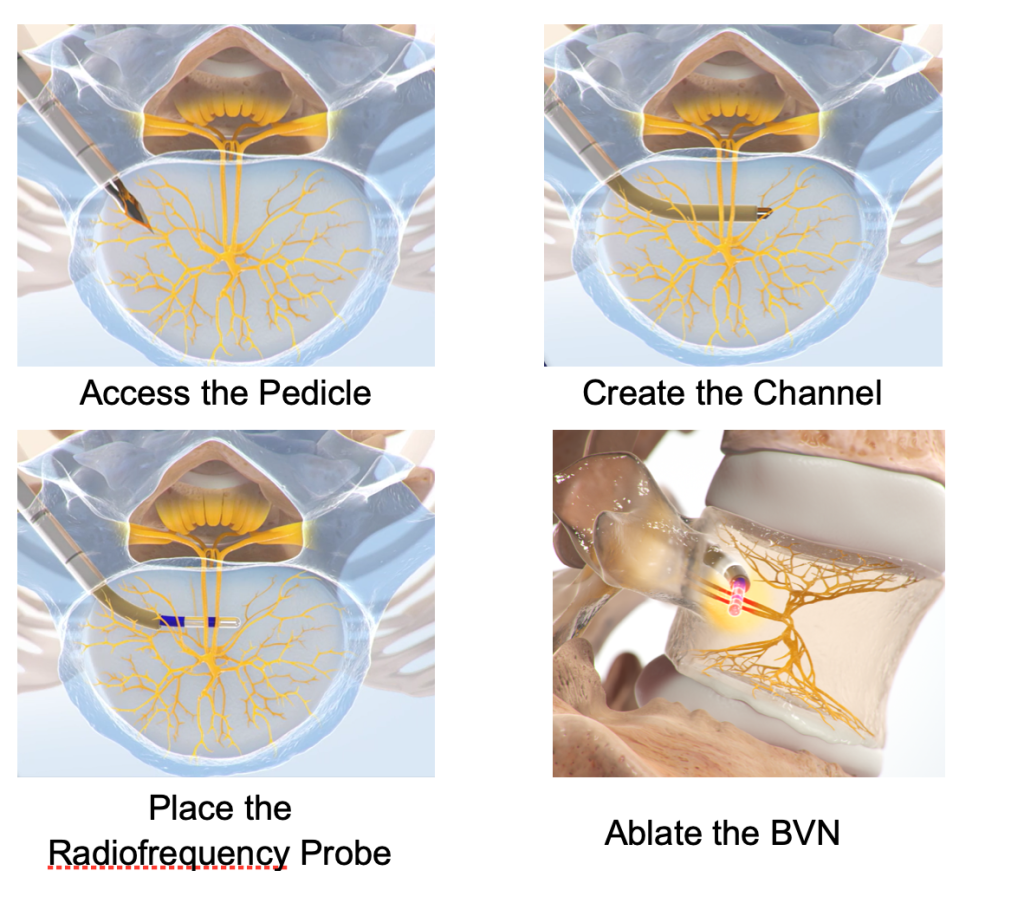
The procedure involves accessing each vertebral body via the pedicle which connects the back to the front of the vertebral body. X ray is used to guide the probe to the BVN. It takes 4-8 weeks for the pain signal to stop. The procedure is outpatient and takes about 1.5 hours to complete. The only restrictions after are no more than 10 pounds lifting for a week.
Thank you, Dr. Bingham, for allowing me a platform to talk about what I do! If you have any questions or spine care needs do not hesitate to reach out to my office at 317-564-6800, or email me.

Neil D. Farren, M.D. is board-certified in Anesthesiology and Pain Medicine. Dr. Farren is a fellowship-trained interventional spine specialist and has received the latest training in non-operative therapeutic and diagnostic techniques used to treat all aspects of spine pathology.
Dr. Farren is a native of Philadelphia, PA and came to Indiana for his undergraduate education at DePauw University. He then received his master’s in biology from IUPUI before spending 3 years in the biomedical engineering field. During that time, he worked on development of catheter technology for interventional cardiology, publishing multiple peer-reviewed papers on the topic.
Dr. Farren attended Indiana University School of Medicine. He completed his intern year at Ascension St. Vincent and his anesthesia residency at Indiana University School of Medicine. Following residency, he completed his interventional pain medicine fellowship at University of Cincinnati College of Medicine where he received the latest training in non-operative spine care. He has published in peer-reviewed journals and presented at regional and national conferences on interventional spine care.
Outside of medicine, Dr. Farren enjoys spending time with his twins and wife. He enjoys ice hockey, golf, and being outside whenever he can be.




