Bulging or herniated lumbar discs
An evaluation can help determine whether a known disc finding relates to your symptoms and which care options make sense.
 Start with an evaluation ↗
INDIANAPOLIS · LUMBAR SPINAL DECOMPRESSION
Living with a bulging or herniated lumbar disc—or pain traveling down your leg? Start with an examination to learn whether nonsurgical spinal decompression may fit your care.
Schedule Your Spinal Decompression EvaluationAn evaluation comes first. No prepaid package required.
UNDERSTAND YOUR OPTIONS
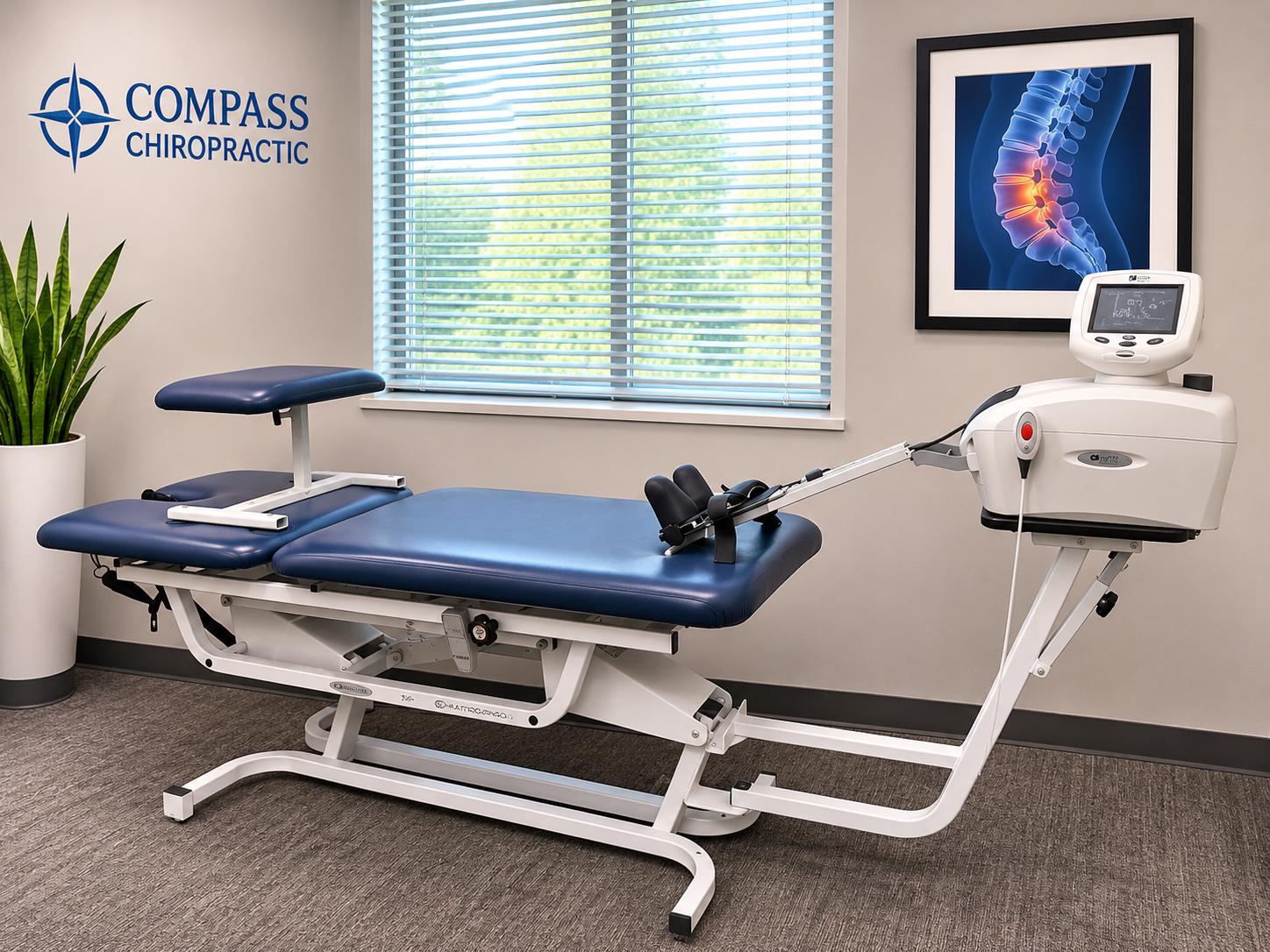
Lumbar spinal decompression is a form of motorized traction. A specialized table applies controlled pulling forces to the lower back, with the goal of easing symptoms in selected patients.
At Compass, we use Chattanooga equipment. Your clinician will explain the treatment setup and settings appropriate for you.
A disc finding on an MRI does not automatically mean it is the cause of your pain—or that decompression is the right treatment. Your history, examination, symptoms, and goals guide the decision.
We’ll help you understand your options, set realistic goals, and reassess your progress along the way. Your evaluation is an opportunity to discuss what matters to you and make an informed decision about your care.
Read the NICE guideline ↗IS IT A FIT FOR YOU?
An evaluation can help determine whether a known disc finding relates to your symptoms and which care options make sense.
Pain, tingling, or numbness traveling into the buttock or leg can have different causes. Clinical screening comes before treatment.
Decompression may be considered as standalone care or alongside optional chiropractic and rehabilitation services when appropriate.
Not everyone is a candidate. Tell your clinician about pregnancy, osteoporosis, fractures, cancer, recent surgery, or other medical conditions. Additional testing or a referral may be more appropriate.
WHAT TO EXPECT
Treatment starts with a conversation and an examination—not a commitment to a series of visits.
Discuss your symptoms, medical history, prior care, and what you want to get back to doing. Your initial examination includes computerized baseline range of motion testing. Bring any available imaging reports and relevant records.
Your clinician screens for reasons to avoid treatment and discusses potential benefits, limitations, alternatives, and whether further evaluation is needed.
If appropriate, agree on a plan and reassess your response. Chiropractic adjustments and rehabilitation are optional services, not a requirement to receive standalone decompression.
STRAIGHTFORWARD PRICING
No prepaid treatment package is required. Discuss the expected visit frequency and total costs before starting care.
$70 / 25-minute session
Insurance may cover the examination, depending on your benefits and medical necessity. Deductibles, copays, or coinsurance may apply. Examination coverage does not establish coverage for decompression; confirm each separately.
CONNECTED CARE
Keep your healthcare team in the conversation.
Compass welcomes patients referred by physicians, chiropractors, and physical therapists. When clinically appropriate, standalone decompression can be considered while you continue your existing care.
Bring your referral and relevant records to the evaluation. With your permission, care can be coordinated with your treating provider. Decompression does not replace necessary specialist evaluation or surgical consultation.
GOOD QUESTIONS, CLEAR ANSWERS
Yes. An initial examination is required before decompression. Scheduling an evaluation does not guarantee that you are a candidate or commit you to treatment.
Not everyone needs an MRI before an evaluation. Bring existing reports if you have them. Your clinician will decide whether imaging or another assessment is needed based on your findings and whether it would change care.
Those outcomes cannot be promised. Clinical evidence is mixed and limited, and some guidelines advise against traction. Symptoms may improve, remain unchanged, or worsen. Your clinician should reassess your response and discuss other options as needed.
The planned $70 rate is for a 25-minute decompression session. Your overall appointment may take longer. Visit frequency and the number of sessions depend on your evaluation and response; there is no universal course or required prepaid package.
No. Standalone decompression is available when appropriate. Chiropractic care and rehabilitation are optional and may have separate fees.
The initial examination is $150 self-pay or may be covered by insurance, subject to plan benefits, medical necessity, and cost sharing. Decompression coverage must be verified separately. Ask about current fees before care begins.
You are positioned on a traction table with supports or harnesses while controlled pulling forces are applied. Tell your clinician immediately about pain, dizziness, new numbness, or worsening symptoms so treatment can be stopped and reassessed.
Seek emergency care for new trouble urinating or loss of bladder or bowel control, numbness around the groin or saddle area, or rapidly worsening leg weakness. Back pain with fever, significant trauma, or a history of cancer needs prompt medical assessment. Do not use online scheduling to delay urgent care.
Learn about back-pain warning signs ↗YOUR NEXT STEP
Meet with Compass Chiropractic to discuss your symptoms
and whether lumbar spinal decompression is appropriate for you.
Required initial examination · $150 self-pay or potentially insurance-covered