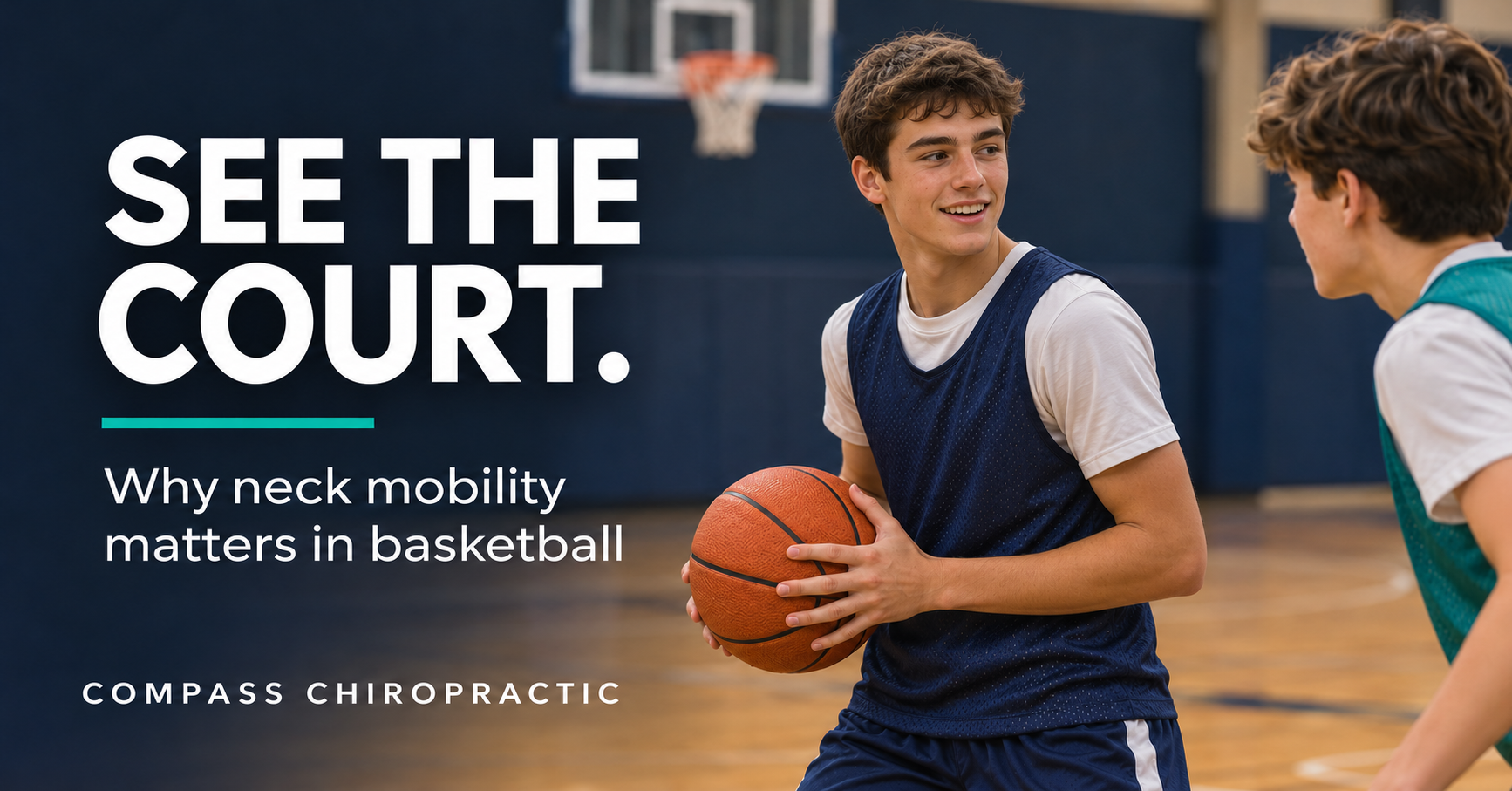
A player takes a hit, walks toward the sideline, and starts shaking one arm. They describe a burning sensation or a jolt traveling from the shoulder toward the hand. It may be a stinger, sometimes called a burner—and it deserves attention even if the discomfort fades quickly.
At Compass Chiropractic in Indianapolis, we want athletes, parents, and coaches to recognize these symptoms and know when to seek help. The first step is simple: report the injury and stop playing until it has been assessed.
A stinger is a nerve injury that can happen when contact stretches or compresses nerves in the neck and shoulder. The brachial plexus—the network of nerves connecting the neck to the shoulder, arm, and hand—is commonly involved.
In football, a tackle, block, fall, or awkward collision can create this stress. Symptoms usually affect one arm and may feel like burning, tingling, or an electric shock. Many episodes are brief, but symptoms can sometimes last much longer. American Academy of Orthopaedic Surgeons
Our stingers flyer highlights several warning signs:
A player may let one arm hang, protect one side, repeatedly shake the arm, or have trouble gripping. These observations are clues, not a diagnosis. Ask the athlete what happened and involve the athletic trainer or another qualified health professional.
Players should describe exactly what they feel, including weakness or numbness. Feeling pressure to stay in the game is understandable, but hiding symptoms makes it harder for the medical team to assess the injury.
Stop participation and report the symptoms immediately. A player should not try to prove the arm is fine by taking another hit.
If there is neck tenderness over the bones, symptoms in both arms, or symptoms in a leg, a more serious spinal injury is possible. Activate the emergency response plan, keep the athlete still, and let trained emergency personnel manage stabilization and transport. American Academy of Pediatrics
Persistent numbness or weakness, significant neck pain, and repeated episodes also need prompt medical evaluation. Do not assume that every episode of arm pain after contact is simply another stinger.
A quick decrease in pain does not establish that the athlete is ready to return. The American Academy of Pediatrics recommends physician evaluation and no return until full sensation, strength, and neck motion have been confirmed. Recurrent stingers warrant further assessment. AAP guidance
Athletes should remain out while symptoms persist, including weakness or neck pain. Recovery may require supervised rehabilitation to restore strength and movement. Imaging or other testing depends on the examination and history; it is not automatically necessary for every stinger. AAOS guidance
For families and coaches, the practical message is to follow the treating clinician’s return-to-play plan and the school’s medical procedures.
Proper tackling technique and appropriately supervised neck strengthening may help reduce risk. Protective collars require individual guidance; their ability to prevent stingers is uncertain, and they must not interfere with safe head position during contact. AAP prevention guidance
Make symptom reporting part of the team culture. Coaches, parents, and athletes should share information about previous episodes with the medical team, including symptoms that happened at practice and seemed to disappear.
Evaluation, rehabilitation, and education for high school athletes is key. At Compass Chiropractic, we assess movement and nerve-related symptoms and help develop an individualized plan to restore strength and function. Care should be coordinated with the athlete’s medical team, with referral when further evaluation is needed.
Treatment choices depend on the examination. An acute neck or nerve injury needs assessment before hands-on treatment is considered.
Have questions about lingering or recurring symptoms? Contact Compass Chiropractic to schedule an evaluation.
This article is for general education and does not replace an individual medical evaluation or clearance to return to sports.