
Do you have pain in the front or back of your shoulder that sometimes radiates down your arm? The subscapularis is one muscle worth understanding when you’re trying to make sense of shoulder discomfort. In the video below, Dr. Bryan Bingham of Compass Chiropractic and Massage in Indianapolis explains where it sits and demonstrates a lift-off test and a massage-cane technique.
Pain in these areas does not identify the cause by itself. A shoulder, tendon, or neck-related problem can produce overlapping symptoms, so the goal is to understand the possibilities and choose the right next step.
The subscapularis is one of the four rotator cuff muscles. It lies on the front surface of the shoulder blade, between the blade and the rib cage. That position makes it harder to reach than the muscles you can easily feel across the back of your shoulder.
Its main job is to turn the upper arm inward, a movement called internal rotation. It also helps keep the shoulder joint stable as your arm moves. See the University of Washington’s subscapularis anatomy reference.
Watch Dr. Bingham’s full demonstration, including the muscle’s location, the lift-off movement, and how he positions a Thera Cane.
Video guide: 0:03 — muscle location and shoulder discomfort; 0:33 — lift-off test demonstration; 1:33 — massage-cane demonstration.
Muscle tenderness and restricted movement can be part of a shoulder-pain presentation. In the video, Dr. Bingham discusses discomfort around the front and back of the shoulder and symptoms that may extend into the arm. These patterns are a reason to examine the whole shoulder and neck, rather than assume one muscle explains everything.
Tender spots are often described as trigger points. Finding a sore spot alone does not establish a diagnosis, and it does not mean that a tendon injury or nerve problem has been ruled out. Pain traveling down the arm, especially with numbness, tingling, or weakness, deserves an assessment. Learn more about shoulder and neck-related arm symptoms.
In the demonstration, Dr. Bingham places the back of his hand against his lower back and lifts the hand away while keeping an upright posture. Clinicians use versions of this test as part of an examination of subscapularis function.
Difficulty with this movement can have several explanations, including pain, limited motion, or weakness. It is not a home test that confirms a “tight subscapularis” or rules out a tear. Avoid forcing your arm behind your back if that position hurts. Read about the role and limitations of rotator cuff examination tests.
A Thera Cane is a curved self-massage tool with knobs and handles that let you control pressure. In the video, Dr. Bingham demonstrates its placement and describes brief holds of about 10–15 seconds before releasing.
The underarm region contains nerves and blood vessels, so accurate placement matters. Ask a clinician to show you the appropriate spot before trying this technique. Use light, controlled pressure; do not dig forcefully into the armpit or chase pain down the arm. Stop if you notice sharp or electric pain, tingling, numbness, or worsening symptoms.
The manufacturer recommends short sessions when beginning, avoiding inflamed areas, and stopping if bruising occurs. Review the Thera Cane owner’s manual before use.
Affiliate disclosure: As an Amazon Associate, Compass earns from qualifying purchases.
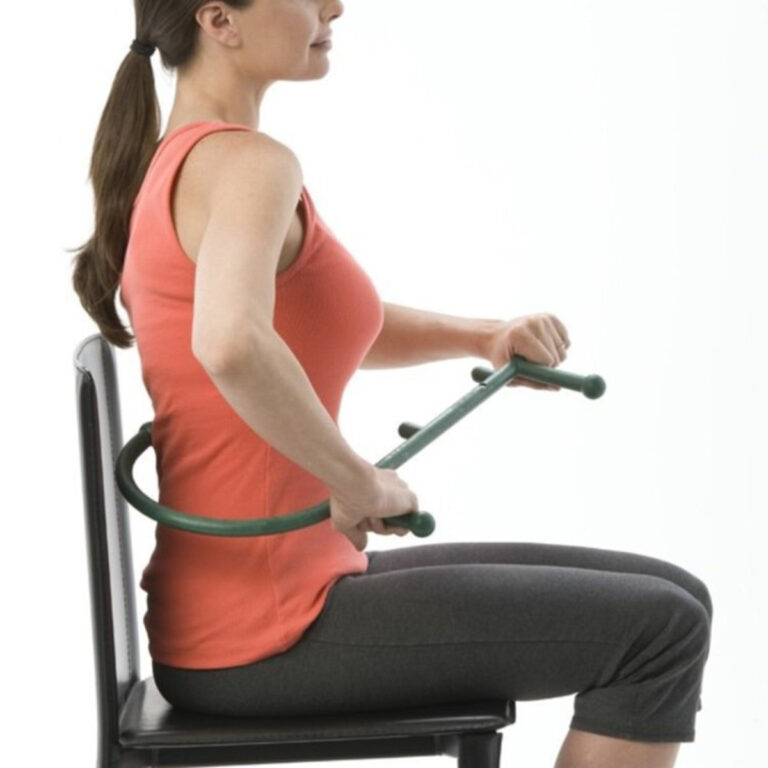
Shop the Thera Cane through Compass’s Amazon link
You can also visit our Compass Amazon Store or explore our additional Thera Cane demonstration videos.
Schedule an assessment if shoulder pain keeps returning, limits everyday movement, or is not improving. Sudden severe pain, inability to move the arm, persistent numbness, or pain after an injury needs prompt medical attention. Shoulder or arm pain with chest pressure or shortness of breath needs emergency care. See guidance on when to seek help for shoulder pain.
At Compass Chiropractic and Massage in Indianapolis, we can assess your shoulder movement and discuss whether hands-on care, rehabilitation, or another evaluation is appropriate.
Contact Compass Chiropractic and Massage to arrange an appointment, or call 317-257-2800.




