
Chiropractic is know for it's successes with neck and lower back pain, but can it help with mental health issues like anxiety. For most people chiropractic wouldn't be the first stop if they were struggling with anxiety. First we need to understand the nervous system before we can understand how chiropractic might affect anxiety.
Our nervous system is divided into to two main categories, the sympathetic and the para-sympathetic.
Important - you can't be in both the sympathetic and the para-sympathetic nervous system at the same time. In other words, you can heal and fight at the same time.
In order to be healthy you need to have a balance between the sympathetic and the para-sympathetic sides of your nervous system. Unfortunately i our world, we spend more time in the sympathetic nervous system which prevents us from accessing the para-sympathetic (rest and digest) side of our nervous system.
If we are in pain, we are vulnerable. If we were in the wild and had an injury our bodies would know that we are more vulnerable to attack therefore we need to be be more vigilant and there be ready for "fight or flight." When we are in the fight or flight part of our nervous system our body releases stress hormones like cortisol. Cortisol is a steroid that prepares you for action, if the cortisol is not utilized to fight or flight it can lead to symptoms of anxiety.
When we sit or stand in poor posture, we round our upper back. Our brains see this as a defensive posture because you're using your back as a shield to protect your vital organs. Even being in a poor posture for a little as two minutes can increase your cortisol levels which can lead to anxiety. The Ted talk below does a great job explaining how posture can influence stress and cortisol levels.
It is believed that nutritional deficiencies can lead to anxiety. Many of us have nutritional deficiencies that go undiagnosed because they aren't great tests for these deficiencies or the testing is too expensive and not covered by insurance. At Compass we use the Health Appraisal Questionnaire to determine if there are any deficiencies that need to be addressed.
There are a number of variables that can contribute to our symptoms, which can make it hard to pinpoint the true cause of your symptoms. If you fall and hurt yourself it is easy to figure out the cause of your symptoms but what if your symptoms are chronic without any obvious cause? A nutritional imbalance could be to blame for your symptoms.
Years ago I had read that 70% of the population is deficient in Magnesium, additional I have read that 90% of the population has a magnesium deficiency. This is thought to be due to our damages gut biome from medications, soils that have been over farmed and the time between picking vegetables and consuming. That being said, most of us could use more Magnesium in our diet.
Why is magnesium important? If you have a nutritional imbalance or magnesium deficiency you're lacking a key nutrient in a number of body functions including releasing muscle tension. Magnesium is the nutrient that allows muscles to relax after Calcium contractions muscles. If you have a nutritional imbalance between your Magnesium and Calcium intake you might be dealing with muscles that always feel tight. A magnesium deficiency can also lead to blood sugar issues, headaches and PMS.
Some of these nutritional imbalances can be seen on blood work, but not all of these tests are reliable and they can get very expensive. At Compass we use the Health Appraisal Questionnaire to identify an nutritional imbalance that could be contributing to your symptoms.
If you would to see if you have a have a nutritional imbalance causing your symptoms, you can fill out the HAQ online by clicking here.
If you prefer the fill out the HAQ the old fashion, you can download the form by clicking HAQ.
https://youtu.be/_CATLqL8n4w
Fullscript is an online natural pharmacy that allows us to make nutritional recommendations through a secure online portal. It also give us access to products that are only available through a heath practitioner.
After you complete your HAQ you will receive a report that looks like this. After three months of taking the recommended supplements you will fill out the questionnaire again and we will compare it with your initial report.
Yes, If we determine that you have a issue and we make a recommendation on Fullscript you can use your HSA for these purchases.
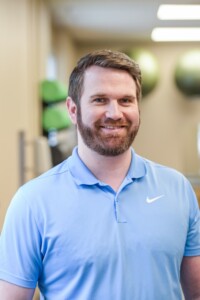
We are very excited to announce that Dr. Matt Crawford has joined Compass team in Broad Ripple! Read below to learn about Dr. Crawford:
Dr. Crawford is originally from a small town in southern Illinois called Teutopolis. Both of his parents were educators. His mother was a speech pathologist in the Teutopolis school system and his father was a guidance counselor and basketball coach for 35 years and is in the Illinois High School Association Hall of Fame for coaching.
Dr. Crawford played for his father and helped him with basketball camps growing up. He also worked as a coach at Hoop Mountain basketball which brought players from all over the Midwest.
Dr. Crawford attended Southern Illinois University where he obtained his Bachelor of Science in Exercise Science in 2010 where he was a Saluki Brand Ambassador.
He obtained his doctorate degree in Chiropractic from Logan University in 2019. While at Logan he was recognized for excellence in patient progress/outcome during clinic rotations. He also met with new aspiring chiropractic students to help them know what to expect at Logan. Shortly after graduation he moved to Fort Wayne where he treated patients and managed a practice for 3.5 years. His main goal in treatment is to help his patients live more functional, higher quality lives. He believes each patient has different goals with treatment and he looks forward to helping you reach them.
In his free time Dr. Crawford enjoys spending time with his dogs, hunting, fishing, and time with friends and family. Fun facts: His high school mascot was the Wooden Shoes and he loves to hit up any kind of buffet.
Dr. Crawford enjoys taking advantage of all that Broad Ripple has to offer like the great restaurants at our corner of 54th and College (Indianapolis), like Yats, 20 Tap, The Bulldog and Fat Dan's.
To schedule an appointment with Dr. Matt Crawford, you can reach us at our Contact Us page.
Do NSAIDs cause chronic pain? Chronic pain is a huge problem in the United States, the CDC estimates that 1 in 5 American suffer from chronic pain (low back pain is one of the most common). The toll that chronic pain has placed on our country is evident most notability in the Opioid crisis. With all the medical advances in managing pain, we still have not been able to curb the affects of this often times debilitating condition.
A recent study in Science Translation Medicine (here in layman's terms) found a potential contributor to our chronic pain problem that might surprise you. They found that inflammation, which is a normal part of the injury healing process, not only helps to resolve acute pain, but it may also helps to prevent future chronic pain.
The most common treatment for pain is, no surprise, anti-inflammatory medications know as NSAIDs or Non-Steroidal Anti-Inflammatory Drugs. There are two categories of NSAIDs; COX 1 and COX 2 inhibitors. COX 1 been the most commonly used which include drugs like Ibuprofen and Naproxen which are available over the counter and COX 2 inhibitors like Celebrex which are available by prescription. Both of these drugs act by blocking the production of cyclooxygenase (COX) which interrupts the inflammation cycle. While this is helpful for short term relief it might be setting us up for future chronic pain.
The aforementioned study which was published in May of this year found that it was the changes that happen during the inflammatory cycle are protective and help to prevent chronic pain. According to the senior study author Jeffrey Mogil , PhD, a professor in the department of psychology at McGill. “What we've been doing for decades not only appears to be wrong, but appears to be 180 degrees wrong,” In this study they found that a type of white blood cell called neutrophils that show up early after an injury play a key role in healing and preventing chronic pain. When we block inflammation we prevent these white blood cells from doing their job and potentially leading to chronic pain. “Inflammation occurs for a reason,” says Mogil, “and it looks like it’s dangerous to interfere with it.”
While this is one study of many more to come, once again it appears that the body knows best and when we interfere with the natural processes it can lead to more significant and long lasting issues. For example, this can lead to NSAIDs caused chronic pain.
What do we do with this information? Should we take the "rub some dirt on it and get back out there" approach to pain? Maybe not, but can we re-think how we use these medication? Many of us use these medications on a regular basis for aches and pains that we could live with, but we choose not to because of the availability of these types of painkillers. Modern medicine has given us powerful drugs that, when needed, can provide significant relief but reaching for these medications for every little discomfort might be setting us up for more issues down the road.
If you're looking for a natural painkiller alternative you should consider Wobenzyme which has shown promise in recent studies.
by Devin Cox LAT, ATC, CEAS, C-PS
It is easy to see potential injuries that could happen to someone working in construction or in a factory. Those could include cuts, low back strain, rotator cuff tears and many more possibilities.
Working at a computer or desk all day can cause a multitude of injuries as well that aren’t as easy to spot. This could include neck pain, carpal tunnel syndrome, chronic low back pain and many other issues. It is important to try and be preventative so that those issues don’t occur. This is where ergonomics comes in. Ergonomics is about trying to fit the workstation to the worker and not trying to fit the worker to the workstation. This way hopefully injuries can be prevented. Ergonomics helps find those issues that may not be an issue right now, but after a year or even just a few months could build up and lead to an injury.
There are so many areas of the workstation that could cause discomforts or injury. This could include, but not limited to:
Devin Cox is a Certified Ergonomics Assessment Specialist who works at Compass Chiropractic. In addition to helping our patients at Compass he offers in home and in office ergonomics assessments, click here to learn more.
Taking NSAIDs to deal with your pain at work? This article on our blog might change your approach.
In our last blog post “How Our Feet Made Us Human,” we discussed the amazing ways in which the evolution of the foot shaped cognitive developments. Today we will examine the ways in which poorly functioning feet can affect the rest of your body- even if you don’t have foot pain!
Before we get to your back pain, we need to discuss the complexity and finely tuned engineering of your feet. Each foot is made up of 26 bones, 33 joints, and 29 muscles. All of these structures work together to provide an efficient means of transportation, and each part relies on the other. The specific configuration of the bones act as levers for the muscles, and the muscles help to hoist the bones into the right positions. In other words, the function of your foot helps to develop its structure, and vice versa.
For example, take a look at the arch of your foot. That arch was not present when you were born. All babies are born with flat feet and the muscular development that occurs as they learn to walk helps pull the arch into formation. As long as the muscles in our feet and legs are functioning properly, we’re able to maintain the arch. In most people with so-called flat feet, their foot has an arch if they’re sitting down, but when they stand up and walk the arch disappears. This happens because the muscles are strong enough to maintain an arch without body weight, but they aren’t strong enough to hold up the arch when subjected to body weight. Having flat feet may not be causing you any direct pain, but it can cause your body to compensate for the weakness in your feet. It could also be a symptom of other muscles or joints that aren’t working well! Let’s discuss.
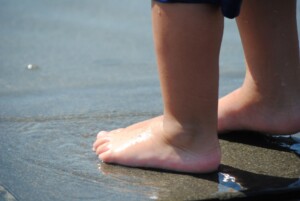
Your body is a pro at compensating for one joint that isn’t working properly. It changes the way your other joints function to accommodate the one squeaky wheel that isn’t working well. For example, maybe you have flat feet and you’ve been told you’re a pronator, or your ankle rolls inward when you walk or run. You no longer benefit from the shock absorption your arch would normally provide, and the rest of your body has to make up for it. Your ankle rolls inward, which causes the inside of your knee to take the brunt of the force instead. It may even cause the knee to bow inward slightly. Putting more stress on the inside of your knee causes your femur (and therefore your hip) to internally rotate, or turn the front of your thigh towards your other thigh. Too much hip internal rotation can pull on the muscles connecting to the sacroiliac joints and lumbar spine. Even slight changes in joint configuration can alter the way your joints function together.
This same process can work in reverse. Long story short, issues in your back can cause alterations in your hip, knee, and ankle, which can then cause problems in your foot. We call this concept of one joint affecting the joints above and/or below it the kinetic chain. There are an infinite number of ways the body compensates for any area that isn’t working well. Everything is connected.
Now, maybe you’re thinking, “I don’t have flat feet and my feet don’t hurt. Are my feet still involved in my back pain?” The answer is: maybe. Maybe your issues aren’t as extreme as the things we discussed above, but there are more subtle aspects of foot health that could be affecting the kinetic chain up to the back. This is why at Compass we include a brief foot evaluation during all of our lower back exams. If reading this made you curious, bring this up at your next visit to go more in-depth. If you have a specific foot concern you’d like to address, please make an appointment with Dr. Valle.
Lastly, you may have noticed we haven’t discussed a key factor in foot health and back pain, which is: shoes. Shoes are a huge topic that we’re going to devote an entire blog post to. Suffice it to say, our footwear has an enormous impact on how the foot and body functions. There’s simply too much to say about it here. Look out for our next post to learn what kind of shoes will best support your body. Spoiler alert: stop worrying about arch support.
Yep, we're giving away massages!!
What a free massage, or course you do! But there is a catch...there is always a catch. We're doing a monthly drawing for an hour massage and all you have to do is recycle, I'll explain. There are certain items that are hard to recycle like K-cups and snack wrappers, but we have found a company (TerraCycle) that will recycle both of these items. We have set up two recycling bins in the office, one for coffee pods (eg K-Cups) and another one for snack wrappers. Every time you bring in an item to recycle you will be put in the drawing for a free massage (60 min) which we will draw at the end of the month.
You do not have to be a current patient at Compass to be part of the free massage drawing and you can enter as many times as you like.
Visit our Indianapolis Recycling Drop Off page for more information about the items that we accept for the free massage drawing.
Do not bring in paper-based wrappers, sticks, blister packs, and food waste or cardboard master cartons (which are typically recyclable at curbside).
If you’re like most people, you probably spend upwards of 12 hours a day wearing shoes. You probably only think about your feet when you decide which shoes will match your outfit best, or if you step in a puddle and your socks get wet. Maybe you’ve experienced the joy of a foot massage, or putting on a pair of really cozy socks. But have you ever stopped to really think about how amazing your feet are? You might only think of your feet when you have foot pain.
Human structure evolved over millions of years and hundreds of species to provide us with an efficient means of transportation. Our feet adapted over time and across species from a quadruped (four-limb) gait, into a biped (two-limb) gait. Humans are the only mammals on Earth that walk on two feet at all times (not counting handstands or playing horsey with your kids). Though there are other species that can walk on two feet to a certain extent, humans have by far the most efficient and effective bipedal gait. This adaptation in itself is revolutionary, and it resulted in further fascinating developments.

For one, evolutionary scientists theorize that bipedal walking allowed for rapid increases in brain size. Why? Walking on two legs instead of four allowed us to use our hands in ways that forelimbs (arms and hands) had never been used before. We were able to carry loads such as foraged food, and soon we started using tools to make life easier. Instead of trying to carry 500 berries in our arms, humans created baskets. Our brains began expanding when we started creating tools, which further increased our abilities as a whole. There is a chicken-or-the-egg style debate among scientists on whether tool use caused the brain to develop and grow rapidly, or vice versa. Either way, we have our huge, intelligent brains (in part) thanks to our feet!
Another fascinating result of walking on two legs is the development of speech. Wait, what? To explain this, we’re going to look at a dog running happily on the beach.
When you watch the dog run, you'll notice that there’s a period of time when all of his legs are extended (stretched out), and a period of time when the limbs hit the ground and contract together. Now let’s add another layer. When dogs (and all animals that travel on four limbs) run, they automatically time their breath with their gait. They inhale when their legs are extended, and exhale when they hit the ground and bring their limbs back together, resulting in panting as fast as they're running. Pretty amazing, right?
Now think about the last time you went on a run or sprinted after your toddler. Were you inhaling when your right foot hit the ground and exhaling when your left foot hit the ground? Probably not. That’s because bipedal running does not couple your breath with your stride. Humans have the ability to control the rate at which they breathe, which allows us to control the variability of our airflow. That ability in turn allowed for the development of speech! Evolutionary scientists are still debating when the development of organized speech occurred, but they are clear that walking on two feet directly gave us the gift of language. You can speak because of your feet!
Since the dawn of language, people have been philosophizing about the human condition and what it means to be human. Though we may never answer that philosophical question, the topics we’ve discussed today may contain evolutionary and biological answers! There are several traits that make humans unique among other species, but perhaps the precise combination of bipedal walking, tool use, and speech are what really differentiate us. In a way, our feet helped make us human.
Hopefully by now you’re amazed by the way your feet have impacted you as a whole. And those are only the cognitive developments! We’re going to continue discussing feet over the next few months, and provide a better understanding of how your feet work, how your feet affect the rest of your body, and tips on how best to care for your feet. In the meantime, if you have persistent foot pain, please make an appointment with Dr. Valle! She has a passion and expertise for helping people get to know their feet and living a pain-free life.
Mother nature finally brought us some snow! While it was not the snowmageddon that was forecasted, there is enough to get out and have some fun. Yesterday I went Cross Country skiing in Indianapolis at a place that I bike quite a bit. It is a spot that a lot of people are not familiar with so I wanted to share it with everyone.
Not too long ago, Indy Parks decided to close Riverside Golf Course which is located across Cold Springs Rd from Marian University. There have been some ambitious plans that have been laid out for the old golf course. Currently mother nature has taken over and reclaimed this once neatly groomed area of Indianapolis. Over the summer I would ride my bike south on the canal towpath and then over the bridge on 30th to the golf course to ride the paved cart path. I had thought that this open plot of land would be a great place for XC skiing and had a chance to try it out yesterday.
There are a couple ways that you can approach the golf course. I decided to take Capitol to 30th street to avoid Cold Springs due to the condition of the roads. Heading south on Capitol you turn right on 30th and take it to the White River bridge. Once you cross the bridge you will turn right on White River Parkway. The parking area is immediately to your left. When I was there the lot had not been completely plowed, but I didn't have any issues with getting stuck. From the parking lot you can head out on skis through the park.
Closer to Cold Springs Road is a steep hill that I saw a handful of people sledding down. It is a bit of a walk to get to the hill from the parking lot. There might be a closer parking area to the hill near Marian, but you would likely have to cross Cold Springs.
https://youtu.be/kWki61qR7Jo
How chiropractic helps kids is a big topic! Imagine a world where clothing feels like sandpaper, light is excruciating, or sounds make you feel like your ears are going to bleed. That is what it’s like for someone with sensory processing disorder, or SPD.
Approximately 1 in 6 children have SPD (some reports say 1 in 20, but this appears to be based on earlier research). It is unclear how many adults are affected; it is typically seen in children with autism and ADHD. There is very little research on adults with these issues at this time.
There are not many treatments for SPD or ways for people with it to get relief. Cutting tags out of clothing and laundering it multiple times before wearing (so it is soft) can help with tactile issues. Precision tinted lenses can help with photophobia, and ear plugs can help with auditory issues. However, chiropractic has been found to help.
SPD is a neurodevelopmental disorder that occurs because the brain is unable to process and integrate common sensory information that is received from one or several of the five senses (taste, touch, smell, vision, sound) as well as two other senses, the proprioceptive system and vestibular systems. The proprioceptive system extends throughout the spine and joints. When there is a problem with this system, it can cause problems with motor skills, learning, behavior, and emotional and social development.

The result is an inability to tolerate certain types of stimulation including being touched, eating certain foods, and hearing certain noises. It can also affect other seemingly unrelated issues like sleep problems, uncoordinated or clumsy, balance issues, and difficulty writing or reading in cursive. This can make life very difficult because the individual essentially lives in a world that they were not built to tolerate. They may feel depressed, anxious, frustrated, or afraid as a result. Parents may feel helpless because they don’t know how to help their child cope in a world that often feels scary and painful.
There are several ways that treatment for SPD is approached. One very effective treatment is chiropractic for SPD.
Another popular treatment for SPD is therapy. Children work with a specially trained, licensed therapist in a sensory gym. The goal is to help them better adapt to their environment.
Diet is an important aspect of SPD treatment, particularly gut health. A clean diet (no processed foods, all natural and organic) is a very good start. Some doctors recommend a gluten free diet.
Whatever the case, it must be well balanced and provide the necessary vitamins and minerals needed for good health. Magnesium and Omega 3 fatty acid supplements may also be advised. This works very well with chiropractic as it also addresses the root of the problem.
It is the primary role of the spine to protect and contain the fragile nervous system. The nervous system is what controls how we process our environment. Its function is to respond and adapt to the internal and external environments.
Structural shifts caused by injury, habits, even a forceps birth can affect the alignment of the spine. This creates neurological stress that hinders the processing and flow of information. By bringing the spine into alignment, chiropractic can help ease the neural stress, improve neural processing, and facilitate better flow of information and neural firing. This, in turn, helps to alleviate the symptoms of sensory processing disorder.
Does your child have sensory processing disorder? Come see us soon to get evaluated!