
 by Bryan Bingham DC, DACRB
It has been shown that low level of Vitamin D in the body can increase the risk for viral upper respiratory infections (URTI). It would stand to reason that supplementing with Vitamin D would decrease the frequency and durations of viral colds but it is uncertain whether or not this is the case.
A new study published in the July 18th issue of the Journal of American Medical Associate (JAMA) looked at the effect that supplementing with Vitamin D had on URTIs. In this study children from age 1 to 5 were given either a traditional dose of Vitamin D of 400 IU/day or a high dose of 2000 IU/day.
At the end of the study, the children who received the high dose of Vitamin D did have higher levels of Vitamin D in their body, but there was not a significant decrease in URTI in the high dose children. They did find a 50% reduction in influenza but the numbers of kids with influenza were not statistically significant and therefore they were unable to determine from this particular study if a high dose Vitamin D supplementation would protect children from influenza.
There were limitations of the study that might explain the lack of support for Vitamin D supplementation for URTIs. The study started in September and many of the kids might have been protected from the lasted effects of sun exposure from the summer. Also, parents had to submit swabs from their children to verify URTIs and they’re were delays in these submissions that would skew the number of reported cases.
My Take
Research has shown that low levels of Vitamin D can leave people more susceptible to colds and flu. Although this particular study didn’t find a direct correlation between decreased colds and high dose Vitamin D supplementation other studies have made this connection.
In the study, 31 one of the kids in the low Vitamin D dose contracted influenza, but only 16 from the high dose group contracted influenza. These numbers are not large enough to have statistical significance but they shouldn’t be ignored. Considering that there were no deleterious effects from taking 2000 IU/day and there was a 50% reduction in influenza case I would say the benefits outweigh the risks.
If you were to go outside for 10 minutes in shorts and a tank top with no sunscreen your body would create 10,000 IUs from the sun’s UVB rays. With the body producing 10,000 IU from just 10 minutes in the sun it makes you wonder why the USDA recommendation is only 400 IU and 2,000 IU is considered a high dose. Also, Vitamin D is available in prescription at 50,000 IU. It is possible that even the high dose of 2000 IU/day is not enough to provide enough protection to prevent URTIs.
In summary, Children are spending less time outside during warmer months, not to mention how little kids get out in the wintertime. Vitamin D has been shown to have many beneficial health benefits with very few risks. I have been giving my kids Vitamin D Drops from Metagenics for years and intend to continue in order to make sure they are protected during the cold months where they are less likely to get Vitamin D naturally from the sun.
If you are interested in finding out what your levels are, you can test your Vitamin D at home.
 Have you ever wondered why you’re always bloated or why your face is breaking out like your hitting puberty all over again? It could be as easy as your diet. The foods we eat can have more impact on our bodies than just the size of your pants. Many foods we find in the grocery store are filled with sugars, artificial additives, refined flour, and vegetable oil. These are just some of the things that leads the body to starts attacking healthy body tissues causing the inflammation. Inflammation not only causes the body to become swollen and bloated, but it can trigger arthritis, fibromyalgia, and asthma.
So how does one start living a life with an “anti-inflammatory diet?” It’s smart to slowly add in the healthy anti-inflammatory foods to your diet verse cleaning out all the bad and replacing it with a whole new diet. This helps your palette adjust to the new foods as well as it helps you from turning back to your old ways. Finding the foods that work for you is really the best option. Having a diet with plenty of omega-3 foods, fruits, vegetables, small amounts of red meat, and no chemicals or additives is what you look for when thinking of an anti-inflammatory diet.
When starting this journey of an anti-inflammatory diet make sure you remember the importance of balance between sodium food and potassium-rich foods. These foods work as a team bringing in the good and flushing out the bad. Without the potassium-rich foods our body will become full of the sodium, and that’s when the swelling begins. Celery is an amazing item to have in your diet, not only does it carry this great balance but it’s full of other amazing health benefits: improving cholesterol and blood pressure and it even helps prevent heart disease. Another great food that carries the balance is broccoli. Broccoli should be your go to diet vegetable, because it’s full of antioxidants that do amazing things for the body other than anti-inflammatory.
One easy item to add to your diet is all the leafy greens! Greens are full of anti-inflammatory fighting agents, and are so easy to add to your daily diet whether it’s in a daily meal or a healthy smoothie. Blueberries and pineapples are two great fruits to incorporate in your daily diet. Blueberries are full of an antioxidant called quercetin. Quercetin are one the strongest anti-inflammatory fighters, they are usually present in citrus, olive oil, and dark colored berries. Another great study of the blueberry is the more you consume them the better your memory and motor functions improved and it also slowed cognitive declined. Pineapples are also full of quercetin and another awesome antioxidant bromelain. These two working together can help make sure the immune system is regulated and helps get rid of the unwanted inflammation.
Chia Seeds are an excellent source of omega-3 and omega-6. They are like little magicians for the body, chia seeds actually go thru your body and reverse inflammation, lower blood pressure, and helps regulate cholesterol. Turmeric is a great benefit to the anti-inflammatory diet, it is full of compound called curcumin which is what fights the inflammation. Curcumin is such a powerful compound that people saw better results in fighting inflammation with curcumin then they did with Advil and ibuprofen. Turmeric is very effective as well with people fighting rheumatoid arthritis due to its high anti-inflammatory properties. Coconut Oil is a pantry must have! Coconut oil has worked so effectively as an anti-inflammatory property that it has actually healed arthritis more than leading medications!
There are so many different types of foods, seeds, and oils that help fight and eliminate inflammation! Deborah Barrington, a senior editor from Industry Dive says, “We expect to see the market for inflammation-fighting foods to grow 7 percent by 2020 and expect 2017 to be a big year in terms of new product announcements and continued research and development.”
If our body is already 60% water then why is it so important to stay hydrated? Staying hydrated is meant as a way to replace the water that your body loses daily. Water plays such an important role in our body. It helps regulate our body’s temperature, lubricates our joints, and it even helps transport the important nutrients that gives us energy and keeps us healthy.
It’s very important to recognize signs that our body gives us when we start to become dehydrated. One of the most common signs we recognize is having a dry mouth, because not only is it annoying when it happens but it’s a clear indication that our mouth needs moisture. If our body isn’t able to transport those important nutrients we’ll start to notice that we’ll have a lack of energy and even slight dizziness as we start becoming more dehydrated. Another easy sign to help us notice if we are becoming dehydrated is having dark urine. The dark urine is our kidney’s way of telling our body that it’s time to start retaining water, so because of that our urine will be darker and more concentrated. It’s also very important to realize that by the time our body lets us know that we are dehydrated we have actually already been dehydrated for a while, so you want to make sure you keep drinking water even if you don’t have these symptoms.
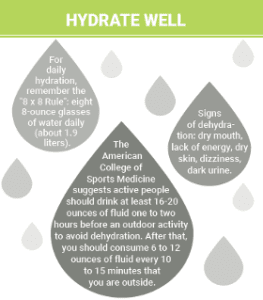
The recommended daily water intake is about 1.9 liters, which may not seem like a lot but for someone who isn’t used to drinking that much water it can be tricky to do. Don’t worry though because like most things there’s an app for that. Waterlogged is an app that allows users to track their daily water intact as well as set reminders to keep on drinking. Waterlogged allows users to select their water bottle type, so this way it is even more customized for the user. Another great feature about Waterlogged is that is able to sync up with most fitness band apps! If you aren’t that tech savvy you can always follow the great 8x8 Rule. 8x8 Rule is just a simple way to remember that you need to drink 8 eight ounce glasses of water daily.
Another great way to keep track of you daily water intake is getting a water bottle with the measurements on the side, like our Compass water bottle! During the month of March we will be giving these bottle out as a part of our hydration month. Stop by this month during our office hours and pick one up!
For more information about hydration, check out our Do's and Don't of Hydration page.
In the early 2000s, many people would wear a step counter on their hips or shoes to count their daily steps. These trackers were a motivation for people to get out, get active, and to hit their daily step goals. Now 10 years later the fad is back, but with more features, technology, and knowledge. In the last year the hype for fitness trackers has really taken a leap again. People are on the move to live a healthier life, and with the help of these digital fitness trackers it has made it easier for people to take that extra step.
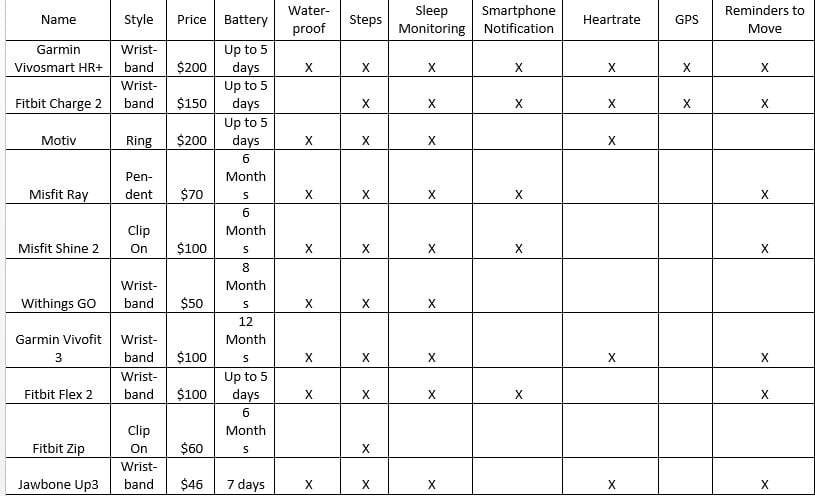
When it comes to finding the right fitness tracker you need to ask yourself some questions. What style will fit your daily life the best? How often do you want to charge your tracker? What are the app features? What is your price range? What are the key features you need to help accomplish your goals? By asking yourself these questions you should be able to find the perfect digital fitness tracker to help reach your goals or to help you stay on track for a healthier lifestyle.
Today’s fitness trackers are available in many different styles to fit your lifestyle and needs. The most popular style is the wrist band, and it can come in many different sizes and styles. Fitbit and Garmin are the leading wrist band brands. Many of these wrist band trackers double as a wristwatch. Some are waterproof like the Garmin Vivosmart HR+, while Fitbit Charge 2 can show you your progress right on the watch verse looking at the app connected on your smart phone.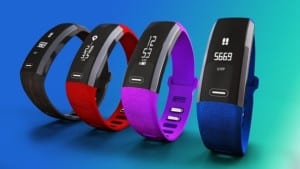
Thankfully other companies are catching on that the wrist band isn’t the most effective style for everyone. The Motiv is a new product coming to the market this spring in March, and its available in a silver or rose gold titanium ring. Since the ring doesn’t have a screen you must rely on your app to see your daily results. The Misfit Ray is a versatile pendant that gives more flexibility for the wearer; this pendant can be worn on a band as a necklace or a bracelet to fit your needs for the day. Misfit also has a fitness tracker that allows the customer to be able to place the tracker in the pocket or attach it to the hip of the pants, but these trackers do offer less features then if it was worn.
The 2016 Fitness Tracker of the Year was the Garmin Vivosmart HR+. This fitness tracker has many great features that include a week long battery life, waterproof, and a GPS tracker. It also monitors you hear rate and sleeping habits! The Garmin Vivosmart HR+ runs in the $220 range. If you’re looking for somethings a little bit cheaper, but doesn’t offer the GPS is the Fitbit Charge 2. Unlike the Garmin this watch offers breathing training for helping with stressful situations. The Misfit Ray is a versatile pendant that can be worn as a bracelet or necklace. This product offers features that include sleep tracking, step counting, a buzz for notifications from your cell phone, and it’s only a $100. Another versatile product from Misfit is the Misfit Shine 2 which is a tracker that can be clipped onto your clothes or shoes. This product has the best battery life, monitors your sleep, counts your steps, waterproof, and still gives you smartphone notifications. The Misfit Shine 2 can be purchased on its website or amazon for $100.
There are many different things to look for when it comes to finding that perfect fitness tracker, but luckily with today’s market there a lot of different products out there to help you find that perfect match.
 [/fusion_text][/fusion_builder_column][/fusion_builder_row][/fusion_builder_container]
Groin or genital numbness while cycling usually means the saddle is placing too much pressure on the perineum—the soft-tissue area between the sit bones. It is common, but it should not be treated as a normal part of riding. Numbness is a signal to change position, reduce pressure and reassess your bike setup.
Stop and get off the bike when numbness begins. If sensation does not return promptly, symptoms repeatedly occur, or you develop sexual, urinary, bowel, back or leg symptoms, seek medical evaluation.
The pudendal nerve and important blood vessels travel through the perineal region. A traditional saddle can compress these tissues, particularly during long periods of continuous sitting. Pressure may temporarily reduce sensation or cause tingling, burning and discomfort.
Several factors can increase pressure:
The correct setup is individual. Pelvic anatomy, riding style, flexibility and the bicycle itself all affect where pressure develops.
Brief symptoms often improve after pressure is removed, but repeated numbness should not be ignored. Research links cycling-related perineal pressure with pudendal nerve irritation and changes in genital blood flow. Some studies have also found associations with sexual dysfunction, although individual risk varies and not every cyclist with temporary numbness develops a lasting problem.
There is no good basis for assuming ordinary cycling-related numbness causes prostate or testicular cancer. The more immediate concern is repeated nerve and blood-vessel compression.
A saddle should support the sit bones without concentrating pressure through the center. Cut-outs, channels, short-nose and no-nose designs affect riders differently. A model that works well for one cyclist may not suit another, so testing options is more useful than choosing a saddle from appearance alone.
A systematic review found that no-nose saddles reduce perineal pressure, although they may feel less stable and shift pressure toward the back of the seat. This tradeoff makes a professional fit and gradual adaptation valuable.
An upward-tilted saddle can increase pressure toward the front. Excessive downward tilt can make a rider slide forward and place more weight through the hands. Small, measured adjustments are preferable to large changes.
Saddle height also affects pelvic position. If it is too high, the pelvis may rock from side to side or the rider may reach at the bottom of each pedal stroke.
A long reach or large saddle-to-handlebar drop can rotate the pelvis forward and increase pressure on sensitive tissue. Adjustments should account for the type of bicycle and the rider's goals rather than forcing every cyclist into an upright position.
Change hand positions, stand periodically when it is safe, and take breaks on longer rides. Indoor training can be especially provocative because riders spend less time coasting, standing or stopping than they do outdoors.
Increase riding time and intensity progressively. Fatigue can change pelvic position and make it harder to maintain a comfortable setup late in a ride.
Arrange an evaluation when numbness persists after the ride, returns frequently despite adjustments, affects sexual or urinary function, or is accompanied by pelvic pain. A clinician may need to consider pudendal neuropathy and other neurological, vascular or pelvic conditions.
Seek emergency care for new numbness in the groin or “saddle” area accompanied by low-back pain, leg weakness, difficulty walking, urinary retention, or loss of bladder or bowel control. Those symptoms can indicate cauda equina syndrome, a rare spinal emergency, rather than simple saddle pressure.
A useful cycling assessment looks beyond the painful area. Hip mobility, trunk endurance, pelvic control, ankle motion, riding posture and equipment setup can all contribute. At Compass Chiropractic and Massage, our team can evaluate movement and help coordinate a gradual return to comfortable riding.
Learn more about our Indianapolis sports injury care and functional rehabilitation.
This article provides general education and is not a diagnosis or individualized bike-fitting prescription.
Blue is the color between violet and green on the optical spectrum of visible light. It turns out that the blue light emitted from our electronics tricks our brains into thinking that it is still daytime. This is especially crucial during the night when we are getting ready to sleep. The blue light inhibits our body’s production of melatonin, which in turn blocks our body and brain from getting the signal that it’s time to get tired and go to sleep. Melatonin is a hormone produced by the pineal gland which is located in the brain. When it starts to get dark outside, our brain signals our body to become tired and sleepy by the secretion of melatonin. A lack of melatonin production, caused by blue light emitting electronics, greatly affects our quantity and quality of sleep.
We all experience the blue light emitted from the electronic devices we use every day. We stare at our screens, whether they be our computers, cell phones or televisions, perhaps not knowing that this invisible blue light is affecting our sleep.
Sleep is a highly underrated routine in each of our daily lives. It is considered one of the most important parts of our health along with diet and exercise. Unfortunately in the chaos of modern life, we are sleeping much less and the quality of our sleep is continuously on the decline. Studies have shown that poor sleep habits have been linked to heart disease, diabetes 2, obesity and depression and more. One of the biggest contributors to our lack of sleep is our use of electronics and artificial light at night.
There are multiple ways we can block that pesky blue light from disrupting our sleep cycle. One simple idea is to turn off all lights and electronics 1-2 hours before bed time. Other options would be to make sure your bedroom is completely dark or to use a sleep mask at night. There are also a few products you can use to help block the blue light. There are blue-blocking glasses that you can wear and a computer program you can install (https://justgetflux.com/) that automatically adjusts the brightness of your screen based on your time zone. If you are an iPhone user, there is a handy setting for your display called “Night Shift” that can automatically shift your display to warmer colors after dark. Any of these ideas would be worth a try if you are having trouble getting to sleep at night.
By Dr. Bingham
Cupping has been around for thousands of years, but it took someone famous like Michael Phelps to bring cupping into the mainstream. If you watched the Rio Olympics, you might have noticed bizarre purple circular marks on Michael Phelps back, these are cupping marks. These marks are from the blood that is pulled up during the process of cupping.
In order to better understand this therapy I decided to try cupping. I sought out local licensed acupuncturist, Tim Moriarty at Eastern Wind Acupuncture. In order to explain the procedure and benefits I decided to leave it to Tim, his description is as follows:
“Cupping is a modality within the framework of Chinese Medicine, that has been around for thousands of years, in which a local suction is created on the skin. It is used to promote healthy, oxygenated blood flow to an area of the body that is either inflamed, tight, or painful. The skin is gently drawn upwards by creating a vacuum with the cup. The cup(s) stay in place for 5-20 minutes. Cupping is used to treat scarring, muscular-skeletal disorders, spinal conditions, and connective tissue concerns. It decreases swelling, reduces inflammation, and relieves tight, painful muscles. It is used either as a stand alone practice, or in conjunction with acupuncture. It also pulls toxins from the tissues of the body, for people who might have chronic toxicity. It is generally painless, deeply relaxing, and a wholly comfortable experience.”
After a thorough history we made our way to the treatment table where I laid face down. The cups, image tiny fish bowls, were place on my back in various places and a suctioning device was used to remove the air inside the cup to create a suction. The intensity of the suction can be varied based by how many “pumps” the practitioner uses. Tim checked in with me as he was increasing the suction to ensure I was still comfortable. After we reached the desired intensity I was left on the table to let the cups do their magic. (see pic)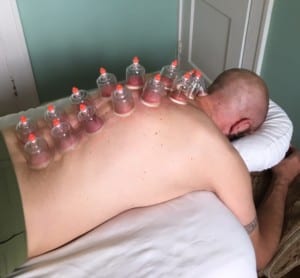
As you rest on the table you are aware of the suction from the cups, but it is not uncomfortable. I wasn’t sure exactly how long I was on the table with the cups, but it’s seemed to be around 10 minutes. Tim came back in the room and removed the cups individually and viola, I was left with these bright purple spots on my back just like Michael Phelps (see pic).
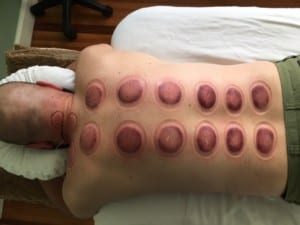
I immediately felt lighter and my breathing felt less restricted. I had also been dealing with some left sided shoulder tension which also felt improved following the cupping.
From talking with Tim I learned that cupping has a variety of applications from aches and pains to detoxification. From my perspective I can see how cupping would be helpful four our patients at Compass Chiropractic and would recommend a consultation with Tim to see if cupping can help you.
With the 2016 Presidential Election drawing closer and closer, let’s take a moment away from all of the controversy surrounding these two candidates and take a look into their diet and exercise habits. If elected, Donald Trump will be the oldest person ever elected to the office at age 70, followed right behind Hilary Clinton, who would be the second oldest at age 69, after Ronald Reagan. Holding the office of President of the United States of America requires a lot of time and energy. We want our President to be smart, responsible and effective which translates to well-rested, properly fed and energized through exercise.
Trump’s least favorite meal is breakfast, although he does love bacon and eggs. Clinton keeps a bottle of hot sauce in her bag at all times and likes to treat herself to Dove ice cream bars. Does the health of each of the candidates come into play when choosing who to vote for? Only you can decide that for yourself. The link below gives insight into the diet of both candidates as well as what they do to keep physically active.
Diet and Exercise Habits of Clinton and Trump
 Before
 After
Taping for an injury or for increased support has come a long way since the days of sitting on the trainer’s table and having the area wrapped like a new-age mummy, the times have changed and there are various types of tape on the market, one of the most popular being Kinesio Tape. The tape is expanding worldwide, being introduced in almost every sport, and there are many manufactures making their own version, some of the most trusted names being Kinesio Tape and Rock Tape.
Being one of sports medicine’s latest and greatest methods for therapeutic applications, the tape helps support joints, increase range of motion, reduce muscle fatigue, and drastically reduces inflammation.
What separates Kinesio tape/Rock Tape from the normal-white athletic tape is the addition of nylon-elastic fibers that are interwoven within the cotton fibers of the tape, which allows the tape to expand and contract, and perform its functions.
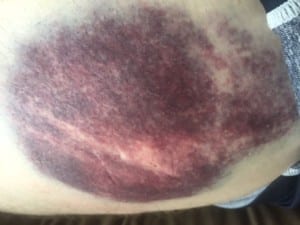
We recently treated a patient that encountered significant bruising on his thigh as a result of a bicycle injury, and we used Rock Tape to help with the bruising and inflammation.
The way the tape works is that it lifts the skin from underlying structures (muscle, fascia, or nerve endings) which allows for increased blood/fluid flow, this allows the affected area to be replenished with fresh blood and nutrients our body naturally needs to recover. Proper application of the tape is crucial for maximum effectiveness; tape-tension, placement, and body positioning increases its effectiveness as well.
Over the span of just a couple weeks the body yields significant improvements, visually and physically. During this time, light stretching and exercise is encouraged. Above is a before and after image of our patient we spoke of before, notice the lines and the reduced redness.
If you are interested in experiencing the benefits of Rock Tape, call and make an appointment today, and see how we can help you!
To learn more about KenesioTape check out our page.
by Dr. Bryan Bingham
My wife and I just celebrated our 12th wedding anniversary and this year we decided to try something a little different. Both of us had been curious about float tanks also know as float therapy and decided to look into local facilities. We had heard of a couple different local businesses and decided to try Better Being Float Center.
-- Update (11/26/23); Just realized that Better Being Float Center is closed 🙂
When we arrived we are greeted by a friendly, welcoming man named Kenny. After completing some simple paperwork Kenny took us back to one of the rooms with a float pod and gave us an introduction to floating. The pod was much larger and modern looking than I had expected. Each pod has about 11 inches of lukewarm water and about 900 pounds of salt which create the buoyancy that makes floating possible. The room was clean and nicely decorated. The floors were tiled and there was a shower in the corner, which is used to rinse prior to the float to remove residues and post float to remove the salt that is left on the skin.
I was surprised to learn that float therapy has been around since the 1950’s when it was know as Sensory Deprivation Therapy. Since it’s inception floating has come in and out of vogue, but has experienced a recent surge in popularity from athletes like Steph Curry from the Golden State Warrior who uses float therapy to give him an athletic edge.
In order to make sure our first float experience was a good one, Kenny gave us tips and strategies that ranged from breathing techniques to stretching in the pod. Following the introduction I was left to shower and start the float. Each session is 90 minutes which includes time for floating and showering.
I entered the pod and found the water to be the perfect temperature. There is a leap of faith as you lay back in the water, but right away you feel the water support your body and lift you upwards until you are floating. The rooms are equipped with motion sensory lights that turn off five minutes after you enter the pod. While the lights are on you can see light seeping in from the space around the pod door. Once the lights go off, it is completely dark to the point that you can’t tell if your eyes are open or closed. The absolute darkness was a little unsettling for a few moments, but it didn’t take long to acclimate.
I had expected to feel tired and relaxed while floating, but instead I felt awake and energized. I focused on my breath and tried to clear my mind of chatter. I found it easier to clear my mind while in the pod then when practicing meditation at home and noticed a sense of invigorated calm. I experimented with different arm positions and tried going through some stretching. It is not uncommon for people to fall asleep during a float, as my wife did, but I was unable to reach that point.
I did notice over the next couple days following the float that I felt a little more relaxed and grounded. I believe that there are significant benefits to turning off the outside stimulus for 90 minutes and allowing the mind to rest and recuperate. The brain is like any other muscle it needs rest. In our fast paced world full of constant stimuli it can be hard to remove yourself from the craziness, but using float therapy can provide that well needed reprieve.
Overall it was a great experience from the introduction through the end of the float. With most things I assume that it will take a few sessions until I can truly experience the benefits of floating, so I plan to return to Better Being and try floating again soon.